Dorcas
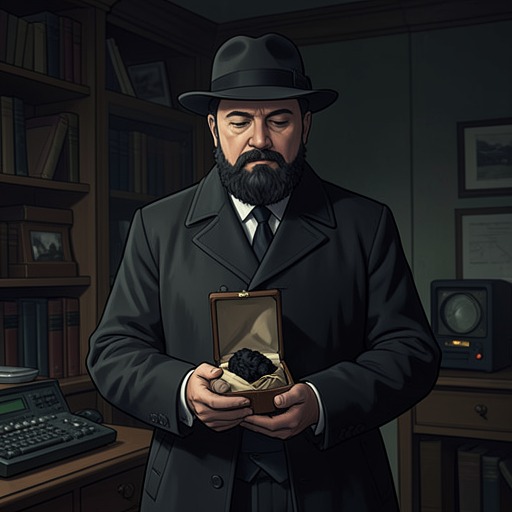
The Mysterious Affair at StylesDorcas is a senior servant at Styles Court and one of the household’s most important witnesses in the investigation of Emily Inglethorp’s death. Her observations of an afternoon quarrel, a later change in Emily’s manner, and the household’s handling of documents give Hercule Poirot evidence with which to revise his understanding of the case. She is both a loyal member of the household and a source whose testimony does not always identify events correctly; that tension makes her recollections valuable without making them infallible.
Identity and Household Position
When Dorcas first appears, she is presented as a traditional, experienced servant, with grey hair beneath a white cap and a reserved manner. Poirot finds her initially suspicious of him, but approaches her courteously and draws her into conversation. Her position in the house is defined by service, access, and attachment: she knows its routines and people, yet her loyalty to the Cavendish brothers can influence what she is willing to say about them.
Her evidence also situates the household within the economies of wartime life. She recalls that Styles once employed five gardeners, while at the time of the investigation only three remain: Manning, William, and a woman gardener. This reduction echoes Emily’s insistence that the house should be economical. The policy reaches even to waste paper, which is saved rather than discarded; that detail later helps explain why a fire in Emily’s room attracts Poirot’s attention as a possible means of destroying a document.
The Quarrel and Emily’s Distress
Poirot asks Dorcas to recount the previous afternoon’s events in detail, explaining that the dead woman’s secrets must be examined if the person responsible is to be brought to justice. Dorcas reports that at about four o’clock, or somewhat later, she heard angry voices from Emily’s boudoir. The door was shut, but Emily spoke clearly. She accused the other person of lying and deceiving her, reminded him that she had supported and cared for him, and threatened that fear of publicity or marital scandal would not prevent her from doing what she considered her duty. Dorcas did not make out the quieter replies.
At first Dorcas is certain the man was Alfred Inglethorp. Her certainty matters, but Poirot later recognizes that the overheard exchange was with John Cavendish, not Emily’s husband. The distinction changes the meaning of the argument: Emily was threatening to expose John to his wife, while the evidence initially seemed to point to a quarrel between Emily and Alfred. At John’s trial, Dorcas remains protective of the Cavendish brothers and firmly denies that the voice could have been John’s, even when her evidence is discussed in court.
Dorcas also recounts a second encounter with Emily at five o’clock. Emily rang for tea, asking for a cup without food. She looked very pale and upset, held a written paper that Dorcas could not identify as a letter or another document, and stared at it as though the words were difficult to believe. Emily said that a few words had changed everything, described having received a great shock, and wondered what to do about the scandal between husband and wife. Dorcas brought her strong tea. Emily said she would feel better after drinking it, but the account does not establish that the tea resolved her distress.
These recollections become a key part of Poirot’s reconstruction. The language of scandal appears in both the earlier quarrel and Emily’s later conversation with Dorcas, but the circumstances and emotional tone differ: anger and composure in the first instance, distress in the second. Poirot infers that the two conversations concern different matters. He places the quarrel with John at around four, the making of a will in Alfred’s favour at about half past four, and Emily’s changed state and the order for a fire around five. Dorcas’s account supplies the observed details; the sequence and its implications are Poirot’s deduction.
Evidence, Loyalty, and the Investigation
Dorcas’s knowledge extends beyond what she overheard. The gardeners testify that Emily called them in to sign at the foot of a long paper beneath her own signature, while blotting paper covered the text above it. This testimony establishes that a document was signed and witnessed without showing the gardeners what it contained. Its significance emerges against the family’s existing inheritance arrangements: Emily’s will from the previous August left her fortune to John, but Poirot points out that her remarriage had automatically revoked it under English law. The later document therefore belongs to a changing legal and financial situation, not simply to the earlier distribution of her estate.
The prosecution at John’s trial presents the destroyed will as part of its case against him, alongside the allegation that Emily had quarrelled with him and that he had purchased strychnine in disguise. The defence, in turn, argues that John knew the earlier will had been revoked by Emily’s remarriage. The legal argument is distinct from Dorcas’s eyewitness evidence, but her recollections help establish the events around the new will and its destruction. Poirot explains that the hot day and Emily’s order for a fire suggested that she wanted to destroy a substantial document, especially because wartime economy meant waste paper was not routinely thrown away.
Dorcas’s loyalty is especially visible in court. She denies that John was the man in the boudoir and persists in identifying Alfred, though John understands that her defence does not serve the strategy of his barrister. Her testimony is therefore a mixture of useful observation and mistaken identification, shaped by devotion to the family rather than by a neutral view of every disputed fact. The narrative gives her loyalty its due without treating it as proof that her conclusions are correct.
Further Clues and Narrative Significance
After the case has drawn intense newspaper attention and reporters have gathered around the house, Dorcas approaches the narrator with information about a question Poirot had asked: whether Emily, or anyone else in the household, owned a green dress. She has noticed the significance of the inquiry and helps direct attention to a chest of clothes. The garments are not used often, she says, though the young people sometimes hold dress-up evenings. She remembers Lawrence dressed as an Eastern king with a large paper knife as a pretend scimitar, and Cynthia in a costume she understands as that of an Apache. The episode gives the investigation a concrete line of inquiry into disguise and shows Dorcas acting as an alert intermediary between household knowledge and Poirot’s deductions.
Dorcas’s importance rests on the gap between what a witness sees and what an investigator can infer. She remembers words, times, gestures, and routines: the shut boudoir door, the paper in Emily’s hand, the five o’clock tea, the signed document, and the unusual fire. She does not always know what those details mean, and her identification of the quarrelling man is wrong. Poirot’s task is to preserve the observations while reinterpreting them. In that process, Dorcas is not merely a servant who reports a clue; she is a bearer of intimate household knowledge whose imperfect but specific account helps expose the difference between apparent evidence and the events it conceals.